-
Sudan: Bleak Outlook for Sudan As Warring Parties Fragment and Shift Allegiances
allAfrica, 27 June 2024
With the eyes of the West focused on the war in Gaza, international attention to the suffering of the people of Sudan – particularly those in Darfur and Khartoum – is… Read more »
-
Sudan: Sudan's Broken Hopes
Armed Conflict Location And Data, 21 May 2024
Sudan's one-year-old civil war has killed thousands of people, displaced millions, and splintered the country into a mosaic of rival militias. Neither of the two main warring… Read more »
-
Sudan: Sudan Is Starving. Now What?
Crisis Group, 26 June 2024
In this episode of The Horn, Alan is joined by Alex de Waal, leading expert on famine and Sudan and the executive director of the World Peace Foundation, to discuss the worsening… Read more »
Bleak Outlook for Sudan As Warring Parties Shift Allegiances
The conflict in Sudan has traditionally been between the central government on the one hand and rebel groups on the "periphery of the state". But a year after the recent fighting broke out, the country "finds itself deeply entrenched in the militarization of local communities -- a dynamic that is unlikely to be reversed in the short term", according to a new report by the Armed Conflict Data And Location.
''Communities that were once living in peace have now taken up arms to defend themselves from the RSF, marking a significant departure from the past," the report said. It noted that violence has been decentralized, with communities self-arming and national actors heavily dependent on their local proxies to achieve military victory.
What began as a power struggle between the regular army and a paramilitary group has now turned into a civil war that has "drawn several militia and rebel groups, along with their foreign backers", ACLED said.
AllAfrica's peacebuilding reporting, featured on AllAfrica and freely available to online, print and broadcast media, is supported by funding from the Carnegie Corporation of New York, a philanthropic organization.An element of AllAfrica's peacebuilding initiative is organizing interactions among peace and security scholars, non-governmental organizations, policy makers and print and broadcast journalists across Africa.
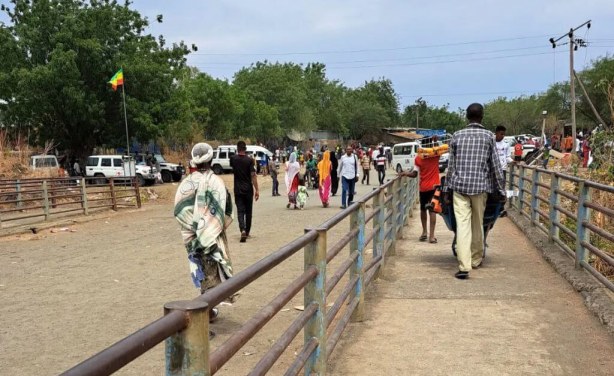
The bridge linking the Sudanese town of Galabat and the Ethiopian town of Metema, on 27 April 2023.
-
Sudan: Mediation Pitfalls - How the Jeddah Peace Talks Complicate Sudanese Politics
African Arguments, 25 June 2024
Debating Ideas reflects the values and editorial ethos of the African Arguments book series, publishing engaged, often radical, scholarship, original and activist writing from… Read more »
-
Sudan: U.S. Blacklists Sudan On Human Trafficking
VOA, 24 June 2024
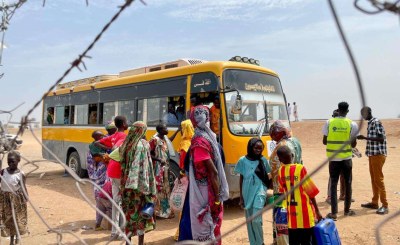
The U.S. State Department moved Brunei and Sudan to Tier 3 on the annual Trafficking in Persons (TIP) Report released Monday, which could subject the countries to sanctions or… Read more »
-
Sudan: RSF Accuses Saf of 'Criminal Act' As Khartoum Bahri Power Station Burns
Dabanga, 23 June 2024
A huge fire broke out at the Bahri thermal power station* in Khartoum North on Saturday evening, and thick clouds of smoke reportedly continued to rise in the sky of the station… Read more »
InFocus
-
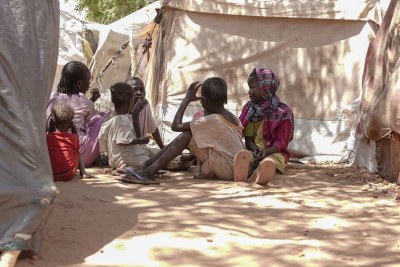
Despite a UN Security Council call for an end to fighting in El Fasher, violence continues to escalate. Humanitarian organizations Médecins Sans FrontiÃ&u Read more »
-
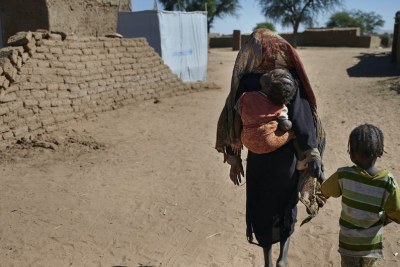
The International Criminal Court has launched an appeal for victims and civil society groups in Sudan to provide testimonies and other evidence to help "advance" its investigations ... Read more »
-
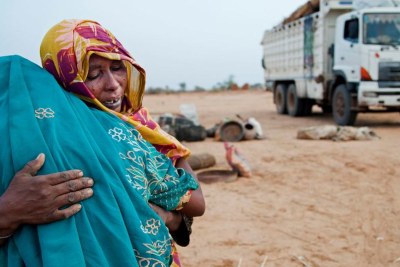
More than 100 people were killed during the raid on Wad al-Noura in Gezira State, said activists, reportedly by the Rapid Support Forces (RSF) which has been at war with the ... Read more »
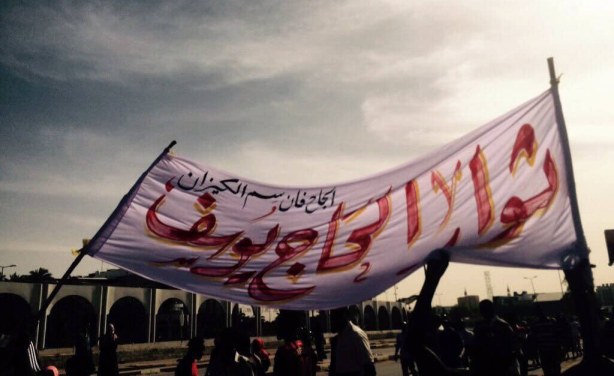
A banner carried through the center of Khartoum, Sudan, on 15 April 2019 by supporters of the revolution against former President Omar al-Bashir.